How AI Agents Are Rewriting Project Management in 2026: The Rise of Autonomous Teams

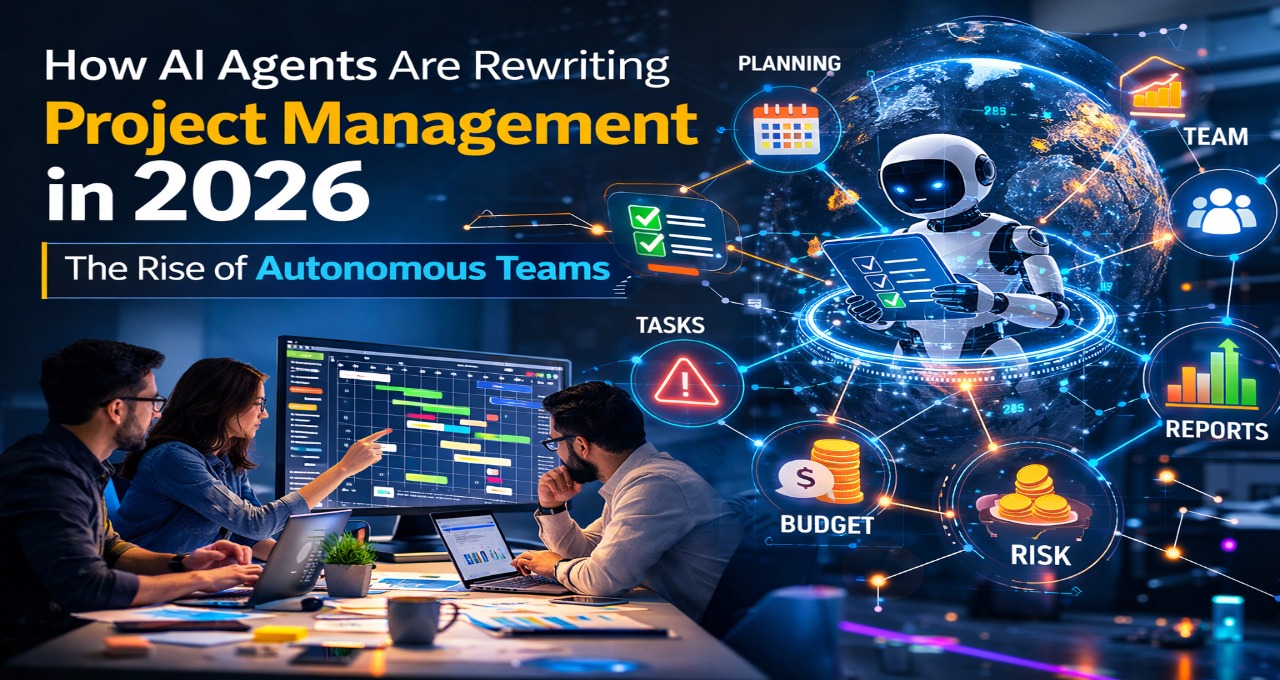
AI agents managing project workflows including scheduling, task allocation, risk prediction, and reporting in a modern autonomous project management system

Inside the emerging “Agentic PMO,” where AI agents allocate tasks, resolve conflicts, and coordinate entire projects without human micromanagement. Autonomous “Ghost Colleagues” Are Beginning to Run Modern Project Teams In 2026, project management is shifting from manual coordination to goal-driven AI agents capable of allocating tasks, predicting project risks, and orchestrating workflows across multiple enterprise … Read more

12 Best AI Productivity Tools for Remote Teams in 2026: The Autonomous Work Stack

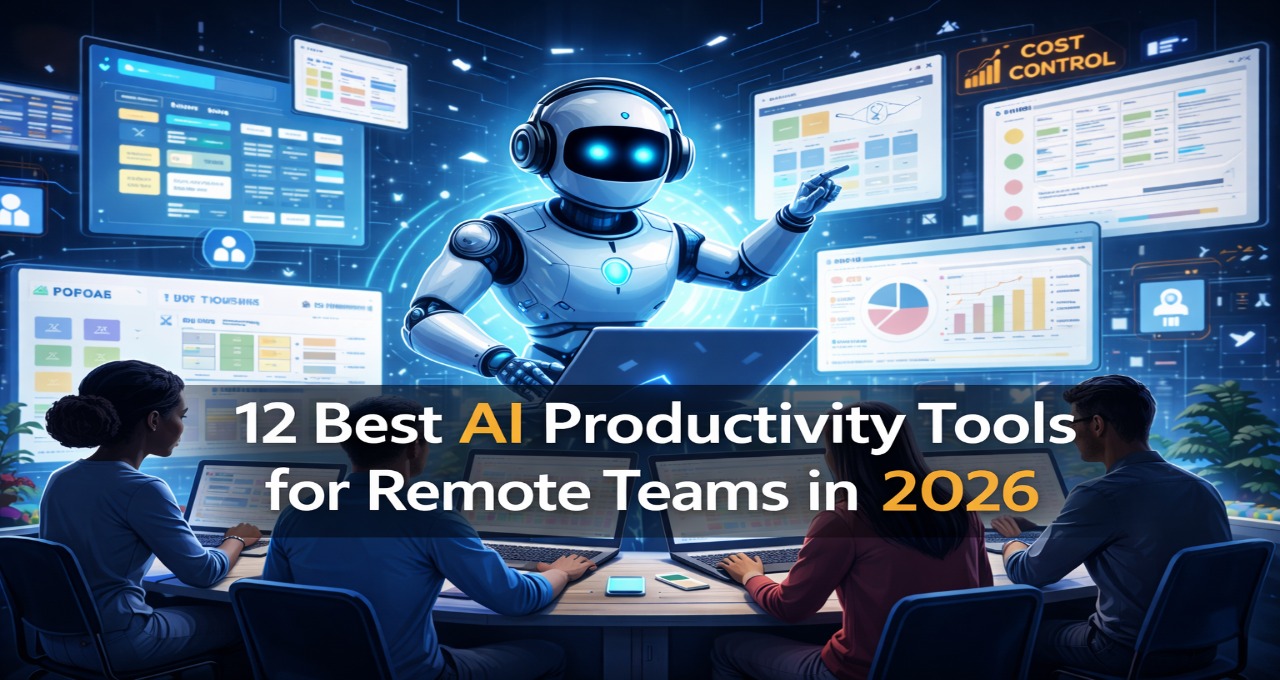
Best AI productivity tools helping remote teams automate scheduling meetings workflows and knowledge management in the 2026 agentic work stack

The era of the “digital colleague” has arrived — and remote teams are quietly redesigning their productivity stacks around autonomous AI agents. The best AI productivity tools for remote teams in 2026 are no longer simple assistants — they are goal-oriented AI agents that automate coordination, scheduling, and knowledge management. Modern remote teams rely on … Read more

How France’s €200B AI Strategy Is Reshaping EU Compute in 2026: Invest AI, Gigafactories & Exascale Sovereignty

France AI gigafactory and sovereign AI infrastructure powering Europe’s InvestAI strategy in 2026

Europe’s AI Investment Push Is Moving from Summit Promises to Infrastructure RealityIn 2026, France has become a central pillar of Europe’s €200 billion Invest AI initiative launched after the 2025 AI Action Summit. The strategy focuses on AI gigafactories, sovereign compute infrastructure, and exascale supercomputers to reduce dependence on U.S. hyperscalers while aligning with regulatory … Read more

Romania’s AI Revolution in 2026: Physical AI, Multi-Agent Systems & Edge Robotics

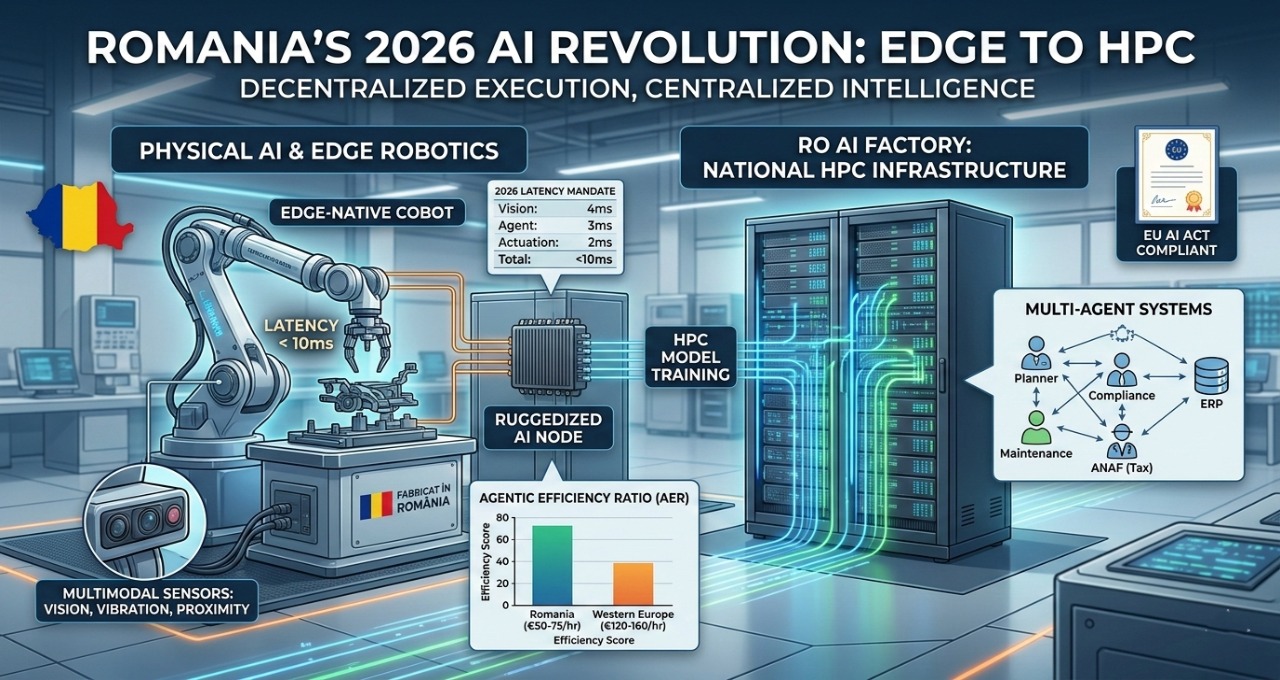
Physical AI architecture in a Romanian automotive factory featuring edge computing nodes and robotic arms for real-time manufacturing.

Romania’s AI development direction in 2026 is defined by three forces: Physical AI robotics in manufacturing, enterprise multi-agent automation systems, and multimodal digital government infrastructure. These deployments increasingly operate under EU AI Act transparency rules and governance frameworks, creating a scalable model for industrial AI across Eastern Europe.      Romania’s AI Shift: From Outsourcing Hub to … Read more

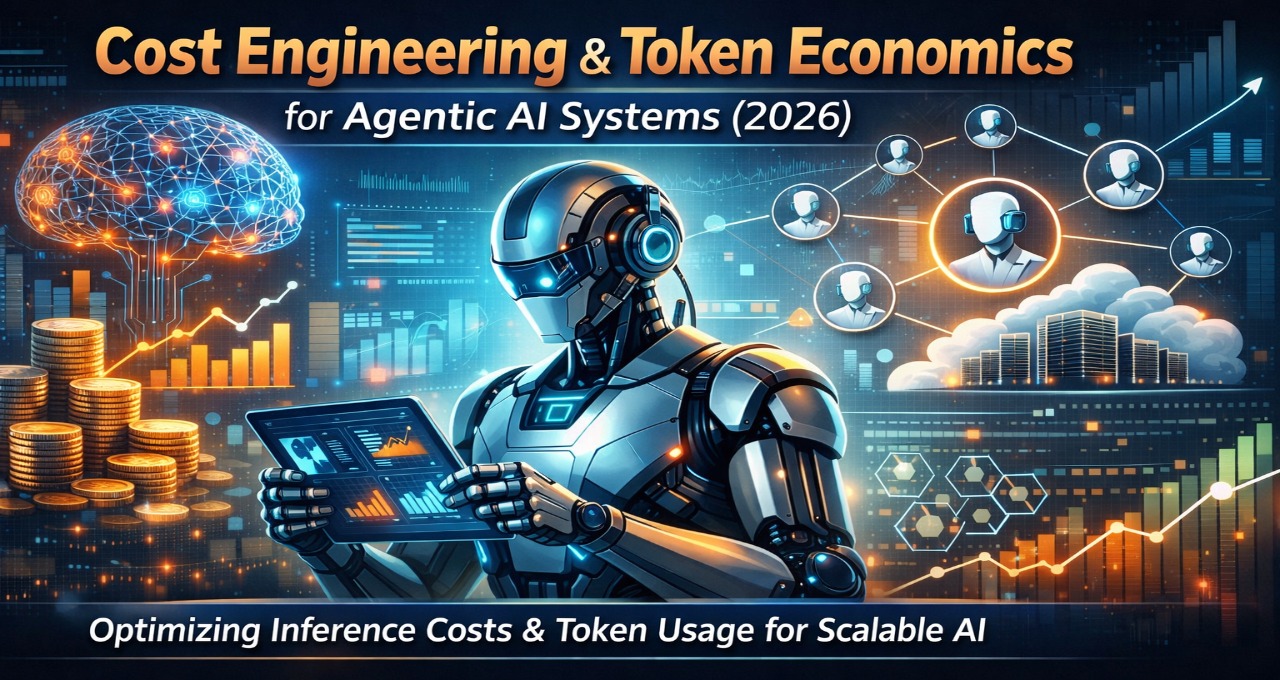
Agentic AI Cost Engineering (2026): How Enterprises Control Token Economics and Inference Costs

Illustration of agentic AI cost engineering with token economics dashboard, multi-agent networks, and inference cost optimization charts.

Enterprises deploying agentic AI systems in 2026 face a new challenge: controlling token economics and inference costs across autonomous multi-agent workflows. Artificial intelligence is evolving rapidly. What started as simple prompt-response systems has transformed into agentic AI architectures capable of autonomous planning, reasoning, and execution. These systems can automate complex business workflows that previously required … Read more

Poland’s $700M Cloud & Cybersecurity Investment: How Microsoft and Google Are Reshaping Europe’s AI Infrastructure in 2026

Poland $700M cloud and cybersecurity investment 2026 featuring Microsoft and Google AI infrastructure expansion in Warsaw skyline.

Poland is no longer just a fast-growing EU economy. In 2026, it is becoming one of Europe’s most strategically important cloud and cybersecurity hubs. With over $700 million committed to expanding hyperscale infrastructure and strengthening cyber resilience, Poland is positioning itself as the digital backbone of Central and Eastern Europe (CEE). But this investment is … Read more

How Enterprises Secure Multi-Agent AI in 2026: mTLS-A, MCP & EU AI Act Governance

Enterprise multi-agent security architecture 2026 with mTLS-A identity verification and Agentic Service Mesh protection.

In 2026, enterprises secure multi-agent AI systems by implementing mTLS-A identity verification, Model Context Protocol (MCP) gateway enforcement, and deterministic governance layers aligned with EU AI Act Article 50 traceability requirements. Autonomous agents must operate under cryptographically verifiable intent, scoped permissions, and auditable semantic tracing to prevent cascade failures. Enterprise architects, CISOs, and governance leads … Read more

How Enterprises Scale Agentic AI Workflow Automation in 2026: Multi-Agent Security & Cost Control

Enterprise Agentic AI workflow automation architecture diagram showing multi-agent orchestration, governance guardrails, state persistence layer, and cost optimization in 2026 enterprise systems

In 2026, agentic AI workflow automation in enterprises scales through Multi-Agent Orchestration (MAO), Model Context Protocol (MCP) service meshes, and deterministic guardrails with token forecasting. Production systems integrate state persistence, mTLS-style inter-agent authentication, and reflection-loop cost caps to achieve 40–60% operational efficiency gains over legacy RPA. The 2026 Shift: From RPA Scripts to Autonomous Multi-Agent … Read more