Cost of Living vs. NIS2 Salary: Is Berlin or Amsterdam the Real CISO Winner in 2026?
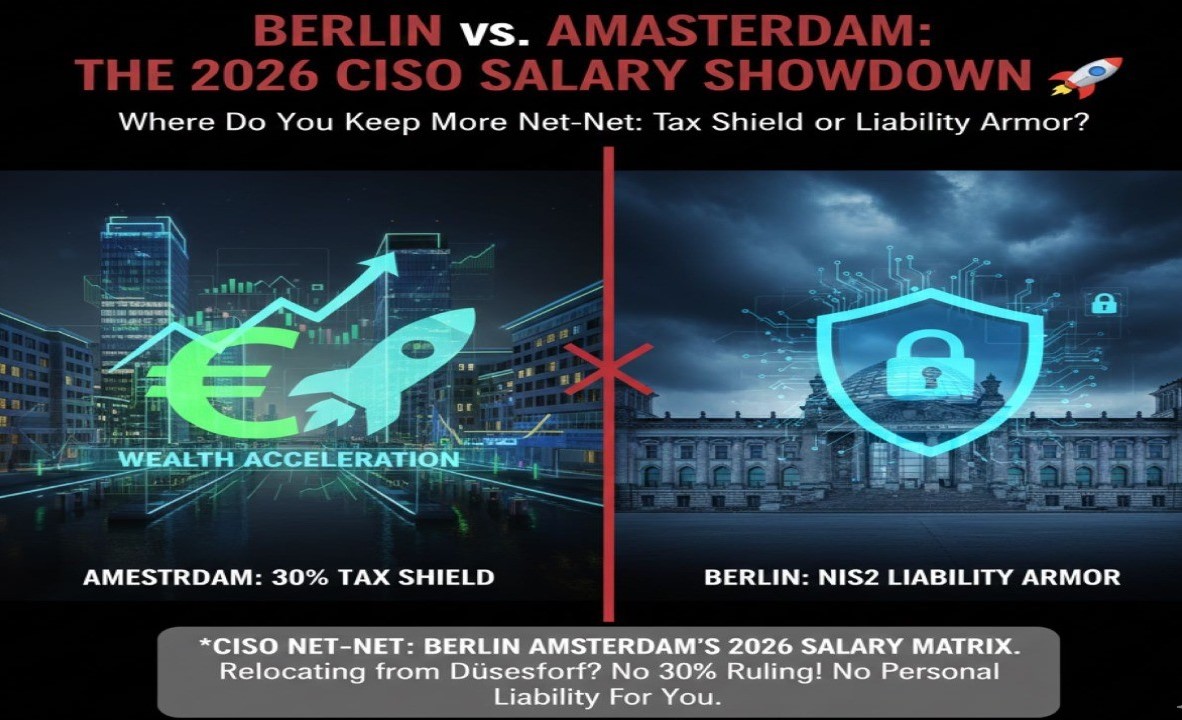
A split-screen comparison of Berlin and Amsterdam skylines with digital overlays for Wealth Acceleration (Rocket icon) and Liability Armor (Shield icon).

In 2026, the question facing senior cybersecurity leaders is no longer “Which city pays more?” but “Which city lets me keep more—safely?”As NIS2 enforcement hardens across the EU, CISOs are discovering that gross salary figures are a vanity metric. What matters now is net-net wealth: take-home pay after tax regimes, housing pressure, insurance costs, and—most … Read more


CISO Personal Liability Stipend Negotiation: The 2026 Survival Guide

Senior CISO in a European office, representing personal accountability and leadership responsibility under the NIS2 directive in 2026.

In 2026, the most dangerous cybersecurity role in Europe is no longer the overworked SOC analyst—it’s the CISO without personal protection. As NIS2 enforcement moves from policy to practice, senior security leaders are discovering that a high salary without legal and insurance safeguards is no longer compensation. It’s exposure. This guide explains why the CISO … Read more

The €15,000 Difference: Why Berlin Is Winning the NIS2 Salary War (And How Paris Fights Back)

Comparison of Berlin and Paris illustrating the NIS2-driven cybersecurity salary gap and regulatory competition between Germany and France.

Across Europe’s cybersecurity market, one salary question keeps resurfacing in 2026: why does Berlin appear to be pulling ahead of Paris for NIS2-driven roles—despite France’s reputation for tougher regulation? At first glance, the answer seems simple. German companies advertise higher gross salaries. Berlin has more open roles. Recruiters push the narrative that Germany is “winning” … Read more

The €50,000 Shadow AI Fine: Why French and German B2B Contractors Are Facing a DORA Liability Trap

Digital illustration showing a freelancer’s laptop connected to banking systems, with AI symbols in shadow, representing hidden AI liability risks under DORA in Germany and France.

Across Germany and France, B2B contractors working with banks and insurers are increasingly using AI tools to write, refactor, test, and document code. In most cases, this usage is informal: personal large language model (LLM) accounts, browser-based assistants, or tools that sit outside a client’s approved development environment. What has changed is not the technology … Read more

The Bucharest Exodus: Why Romanian Devs Are Moving to Warsaw for the €300/hr “DORA Premium”

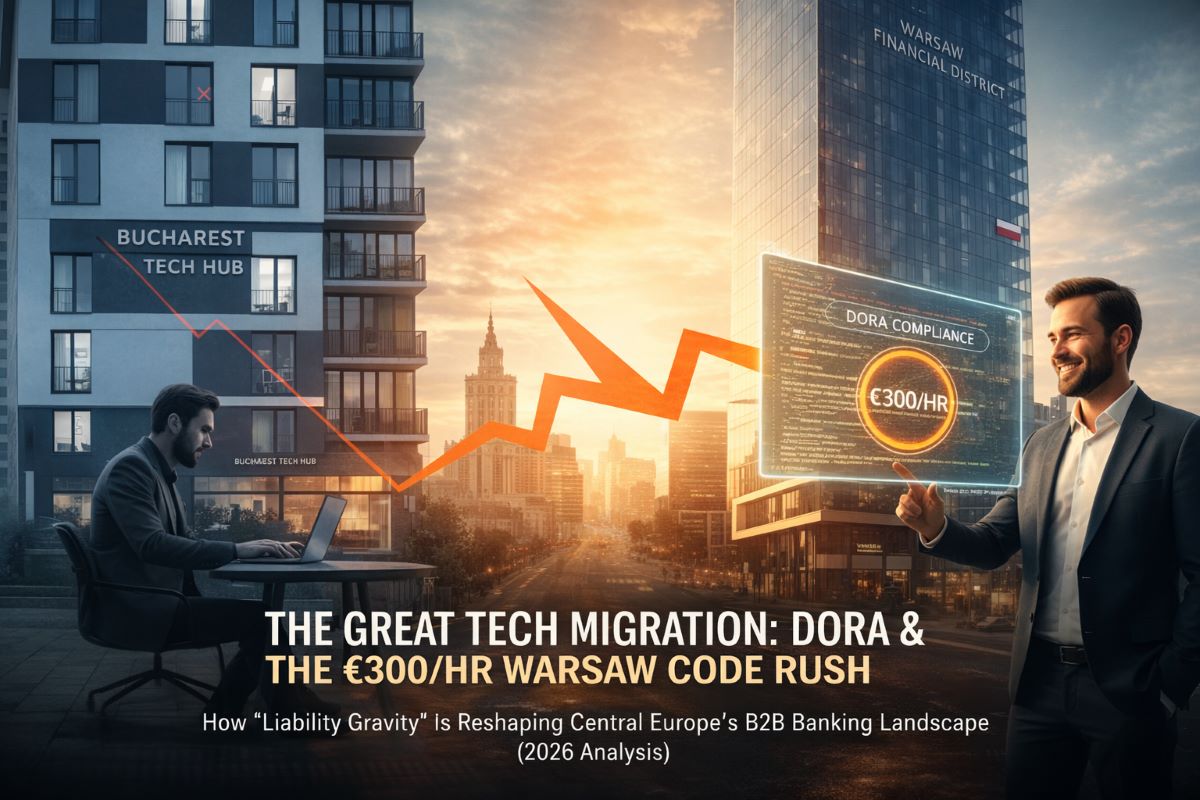
A split-screen visual showing a developer in Bucharest looking toward a high-tech Warsaw banking district skyscraper with a digital overlay of DORA 2026 compliance rates of €300 per hour.

The Quiet Capital Shift No One Is Pricing Correctly In 2026, Europe’s banking talent market is no longer governed by skills scarcity.It is governed by liability gravity. While Bucharest continues to produce world-class Java engineers, Tier-1 banks are quietly shifting their highest-paying B2B contracts toward Warsaw and Kraków. The reason is not talent quality, nor … Read more

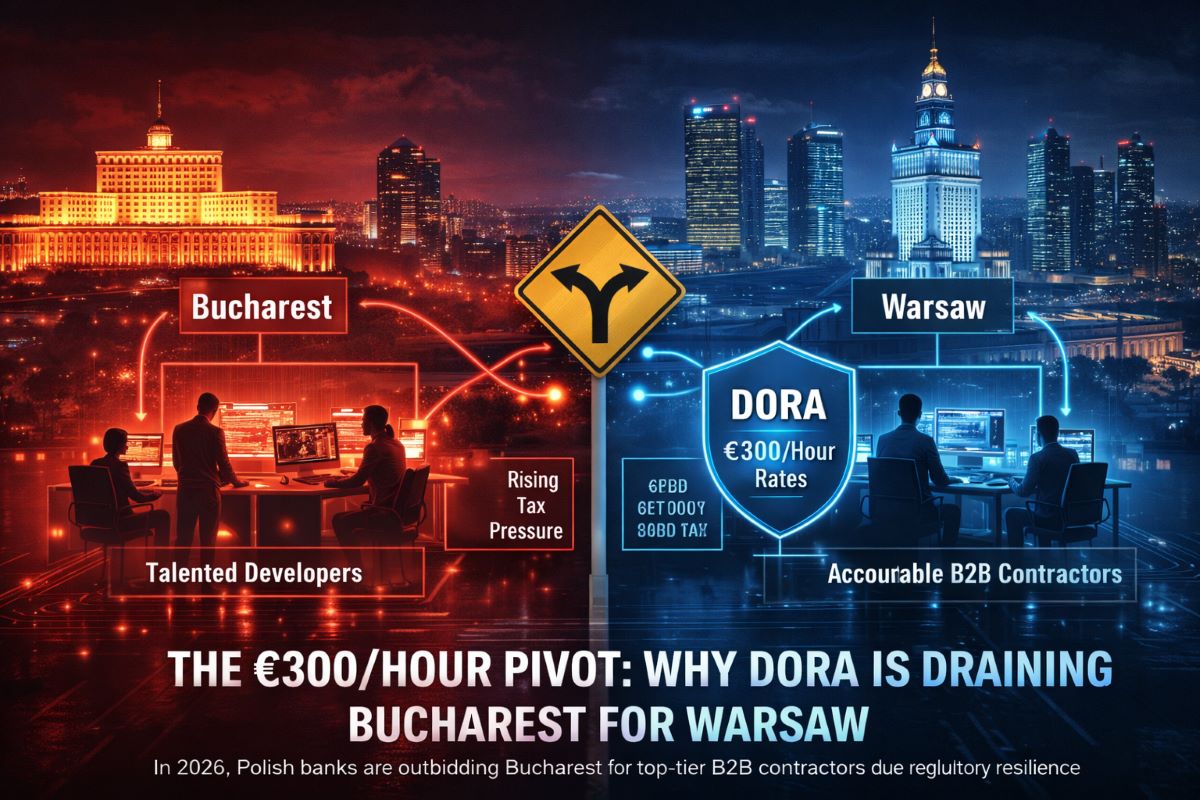
The €300/Hour Pivot: Why DORA Is Draining Bucharest for Warsaw (2026)

“DORA 2026 compliance is reshaping B2B IT economics, as Warsaw’s regulated banking infrastructure commands higher contractor rates than Bucharest due to audit liability and resilience requirements.”

Update (2026): This analysis reflects the latest DORA enforcement guidance, EU banking supervisory expectations, and contractor market conditions currently in force. By 2026, the most important shift in Europe’s financial-sector labor market is no longer about skills, salaries, or tax optimization. It is about liability placement. As the Digital Operational Resilience Act (DORA) enters live … Read more

Shadow AI: The “Silent Breach” Threatening Warsaw’s DORA 2026 Compliance (Java 25 Guide)

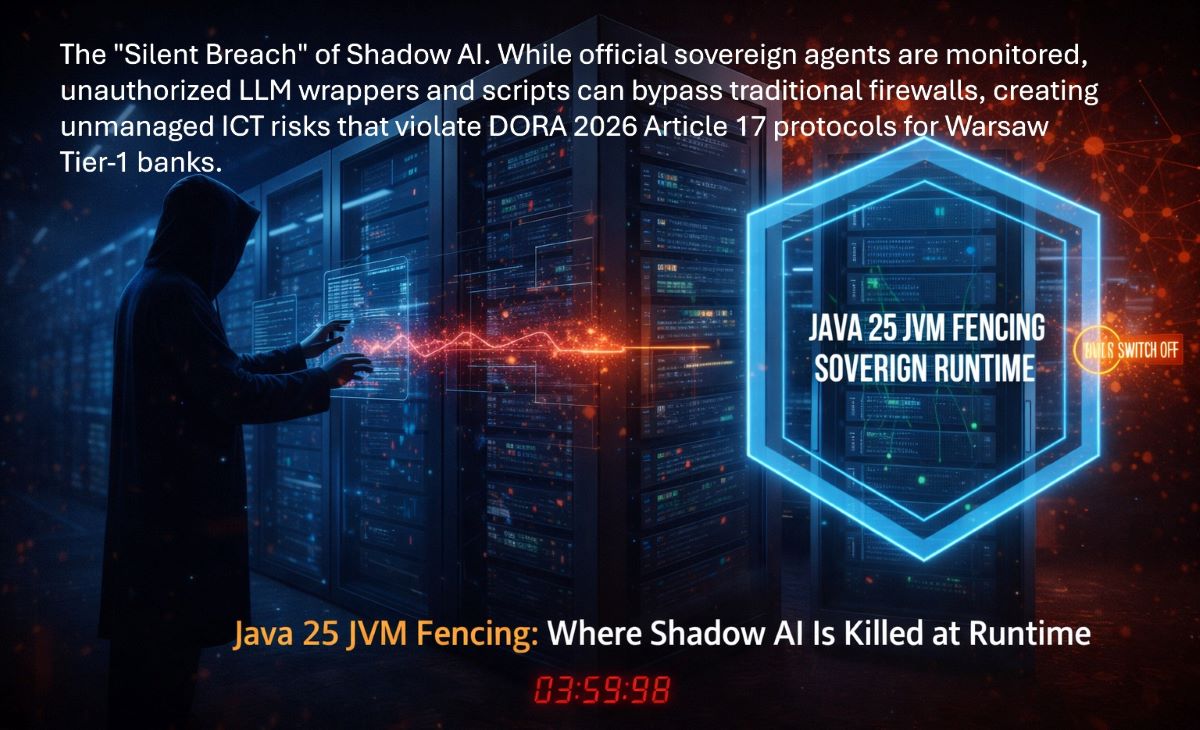
A conceptual visualization of Shadow AI as a glowing purple figure behind a banking firewall, representing unmanaged AI agents bypassing traditional ICT security in 2026.

Update (2026): This analysis reflects the latest DORA enforcement guidance, NIS2 implementation realities, and JVM platform changes now in force across EU Tier-1 banks. Warsaw’s Tier-1 banks are entering 2026 with one clear advantage: they operate inside one of Europe’s most tightly controlled, sovereign AI infrastructure environments. As detailed in Warsaw’s AI infrastructure versus Bucharest, … Read more

Beyond the Sandbox: The DORA 2026 Audit for Agentic AI in Warsaw’s Tier-1 Banks

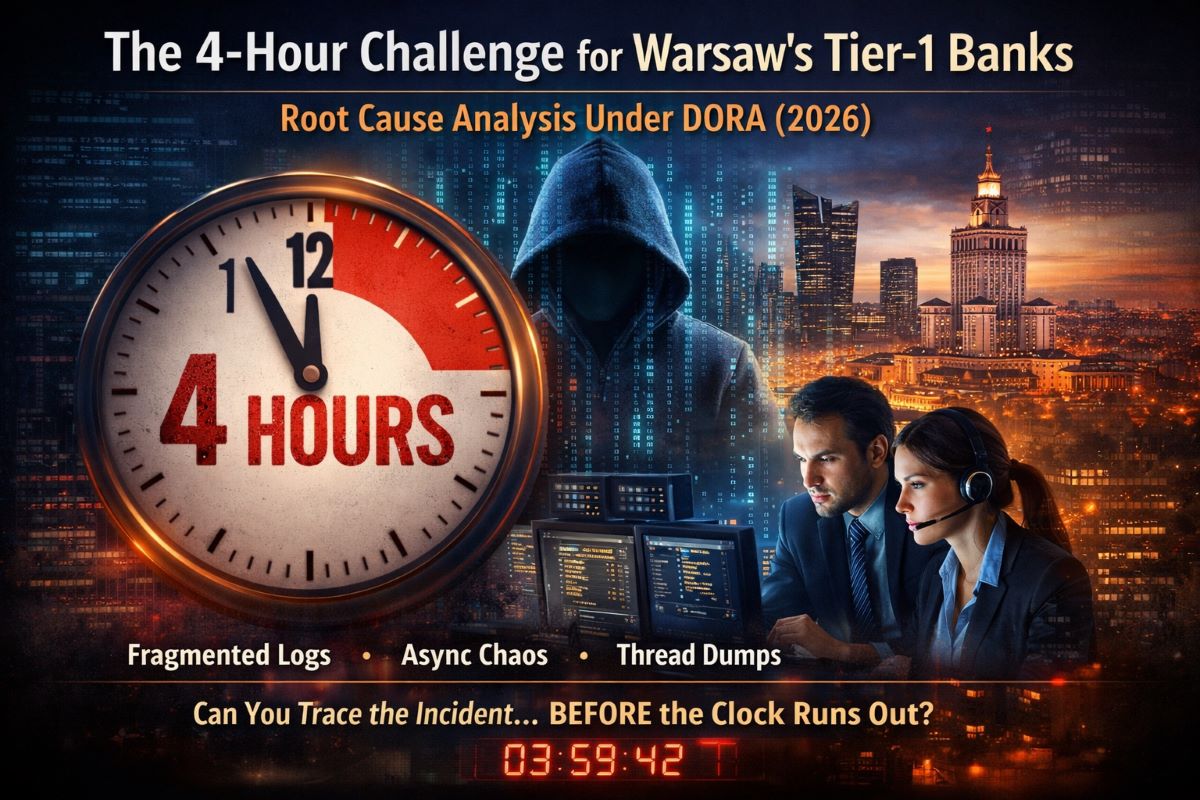
DORA 2026 four-hour incident reporting window for agentic AI in Warsaw Tier-1 banks, showing Java 25 execution traceability and regulator audit pressure

Update (2026): This analysis reflects the latest regulatory, labor, and platform changes currently in force. Warsaw’s Tier-1 banks entered 2026 with a paradox. Their AI systems are more capable than ever—running on sovereign cloud infrastructure, powered by Java 25, and executing millions of autonomous decisions per hour. Yet regulatory risk has not declined. It has … Read more

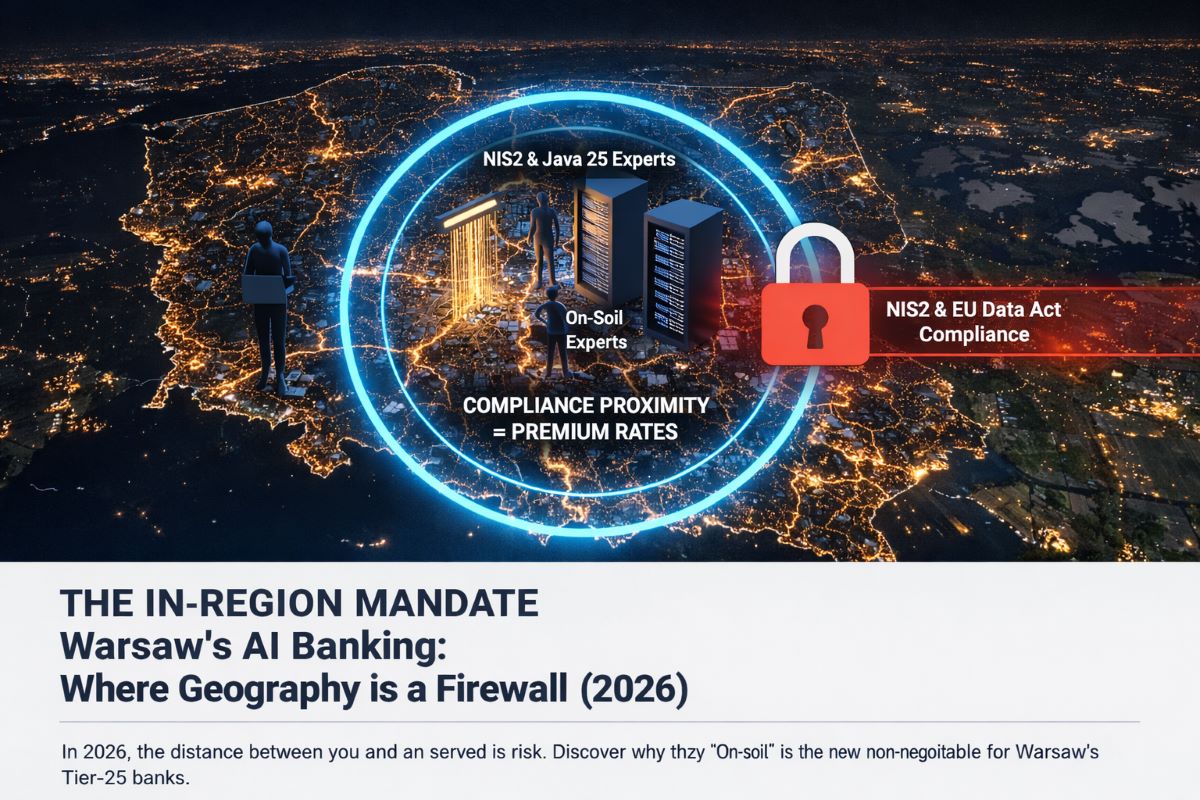
The In-Region Mandate: Why Warsaw’s AI Banking Infrastructure Requires “On-Soil” Java 25 Experts in 2026

Map of Poland highlighting Warsaw’s Tier-1 AI banking infrastructure with on-soil Java 25 experts, NIS2 and EU Data Act compliance zones, and the concept of compliance proximity in 2026.

Update (2026): This analysis reflects the latest regulatory, labor, and platform changes currently in force across the EU banking sector. Warsaw has already established itself as Central Europe’s most advanced AI-ready banking hub. Sovereign cloud regions, GPU-dense infrastructure, and low-latency execution environments are now operational realities rather than roadmap promises. Yet in 2026, Tier-1 banks … Read more

Java 25 Migration & Project Loom: The Technical Debt “Gold Mine” for B2B Contractors in Poland’s Banking Sector

“Visual comparison of legacy Java 8 and Java 11 banking systems versus Java 25 architecture in 2026, highlighting Project Loom virtual threads, ZGC low-latency garbage collection, and sub-5ms execution targets in Warsaw Tier-1 bank cores.”

In 2026, Poland’s banking sector is facing a paradox. Warsaw hosts some of Europe’s most advanced AI-ready infrastructure, sovereign cloud regions, and GPU-dense data centers. Yet deep inside many Tier-1 banks, the core transaction engines still run on legacy Java architectures designed for a pre-agentic era. This gap—between modern infrastructure and outdated execution models—is no … Read more